
What Are Primitive Reflexes?
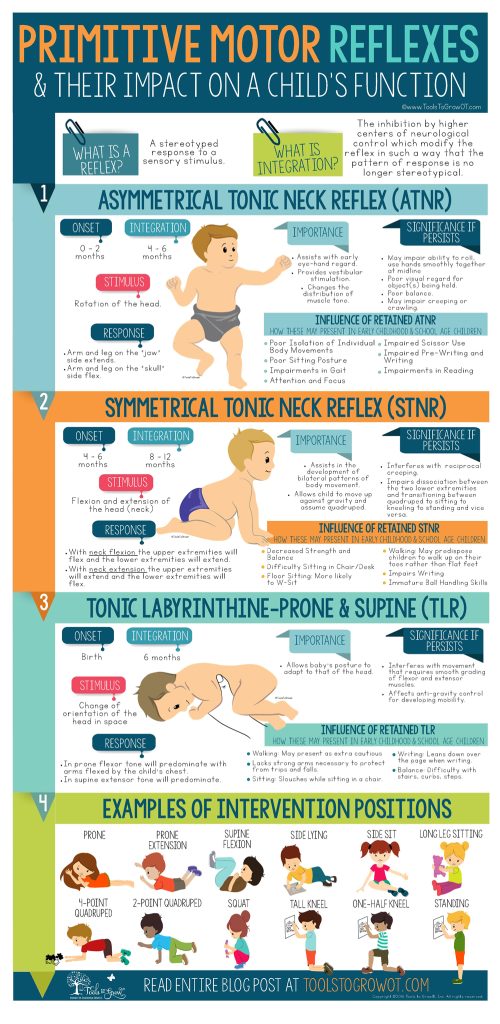
Primitive reflexes are automatic, involuntary movements that originate in the central nervous system for vision and learning . They are exhibited by infants in response to specific sensory stimuli. These reflexes are a crucial part of early development, serving as the foundation for more complex motor and sensory skills. As a child grows, these reflexes should gradually integrate into voluntary movements. Monitoring primitive reflexes provides valuable insights into a child’s neurological development.
These reflexes are called “primitive” because they are the earliest reflexive responses that an infant displays. They emerge in utero and persist for the first few months of life. Hardwired into the nervous system, primitive reflexes play essential roles in newborn survival and development.
Types of Primitive Reflexes
Moro Reflex (Startle Reflex)
One of the most well-known primitive reflexes is the Moro reflex, often referred to as the startle reflex. When an infant experiences a sudden loss of support or hears a loud noise, they instinctively spread their arms wide before bringing them back while crying. This reflex likely evolved as a survival mechanism, helping the infant cling to a caregiver. As the nervous system matures, the Moro reflex diminishes, allowing voluntary control over arm movements.
Rooting Reflex
The rooting reflex is triggered when a baby turns its head in response to a touch on the cheek or mouth. This reflex is crucial for early feeding, as it helps the baby locate the mother’s breast or a bottle. Over time, as infants gain better head control, the rooting reflex fades, making way for voluntary head-turning in response to stimuli.
Palmar Grasp Reflex
The palmar grasp reflex involves a baby tightly gripping an object placed in their palm. This reflex serves as a precursor to voluntary grasping and fine motor skills. Over time, as the infant’s motor control improves, the reflex weakens, leading to the ability to intentionally reach for and hold objects.
Why Are Primitive Reflexes Important?
Primitive reflexes play a crucial role in early childhood development, but it is equally important for them to integrate as a child grows. If these reflexes persist beyond their typical developmental timeline, it may indicate neurological delays or other developmental concerns.
Pediatricians and developmental specialists often use primitive reflex assessments to evaluate a child’s neurological function. The presence or absence of these reflexes can provide key insights into the maturation of the central nervous system and help diagnose or monitor developmental disorders.
Primitive Reflexes, Vision, and Learning
Certain primitive reflexes affect vision and learning by influencing balance, coordination, and focus. If these reflexes fail to integrate, they may contribute to difficulties in reading, writing, and concentration. In upcoming posts, we will explore six specific reflexes that directly impact vision and learning.
Learn More
Understanding and monitoring primitive reflexes can provide valuable insights into a child’s overall health and development. Ensuring proper reflex integration supports motor skills, sensory processing, and cognitive function. Click here to learn more or contact us now for expert guidance on child neurological development.


