For those of us who spend hours in front of a computer or hunched over our phones, it’s easy to recognize the impact poor posture has on our back and neck. However, many people don’t realize that bad posture can also negatively affect eyesight. Over time, poor posture may contribute to eye strain, blurred vision, headaches, and even long-term visual impairment.
In this article, we’ll explore the fascinating connection between posture and vision, the risks associated with poor posture, and practical solutions to improve both your spinal health and eyesight.
The Link Between Posture and Vision
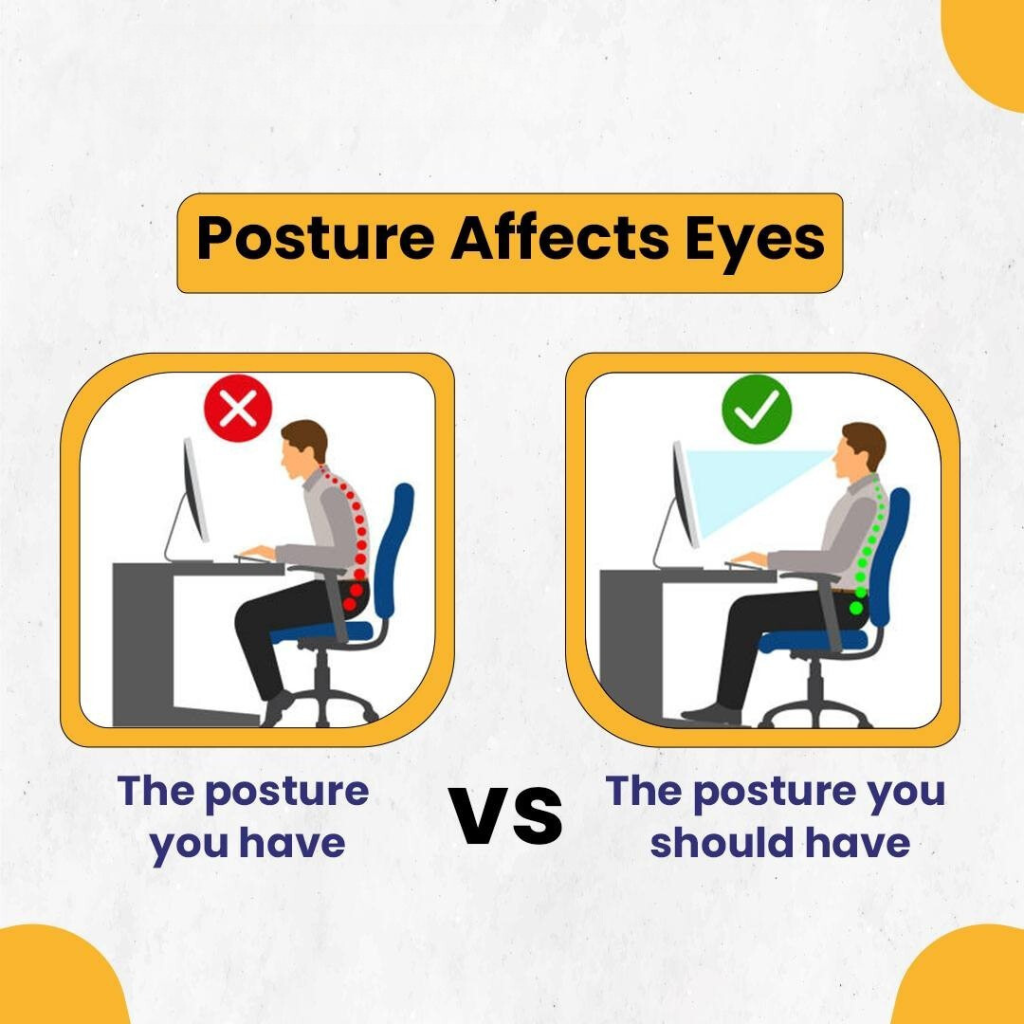
At first glance, it may seem that vision and posture are unrelated. After all, how can the way we sit or stand affect our eyes? However, the relationship between posture and vision is deeply rooted in the anatomy of the nervous system, circulation, and muscle function.
1. How the Eyes and Brain Work Together
Your eyes are a direct extension of your brain, forming a vital part of the central nervous system. When you see an object, light enters your eye and strikes the photoreceptors in the retina. These signals travel through the optic nerve to the brain’s visual cortex, which processes the images and helps the body respond accordingly.
Since the brain plays a critical role in interpreting vision, anything that disrupts its function—such as poor blood flow or nerve compression from bad posture—can affect eyesight.
2. How the Spine Affects Vision
The spinal cord serves as the main communication highway between the brain and the rest of the body, including the eyes. Good posture allows for efficient circulation and nerve transmission, ensuring that the eyes receive the necessary signals from the brain. However, when you slouch or develop forward head posture, the misalignment of the spine can slow down nerve impulses and reduce blood flow to the eyes, leading to symptoms such as:
- Blurry vision
- Eye strain and fatigue
- Headaches and migraines
- Reduced focus and concentration
3. Forward Head Posture and Eye Problems
A common posture issue in the modern world is forward head posture (FHP), which occurs when the head juts forward due to prolonged screen time or looking down at a phone. This misalignment places excessive pressure on the cervical spine and strains the muscles responsible for stabilizing the head.
Studies show that forward head posture can increase tension in the neck and upper back, leading to decreased blood circulation to the eyes. This can cause visual discomfort, difficulty focusing, and even increase the risk of developing myopia (nearsightedness) over time.
Symptoms of Poor Posture That Affect Vision
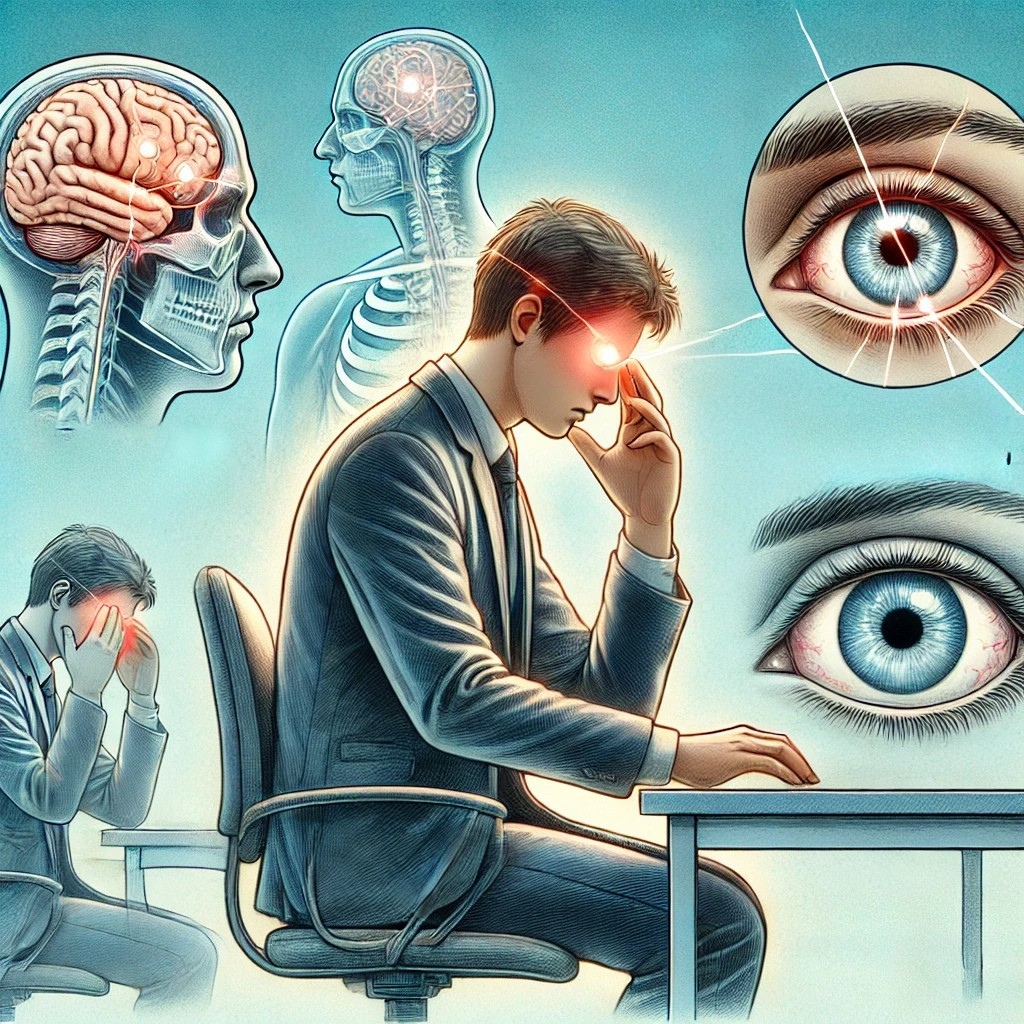
If you have poor posture, you may experience some of the following symptoms related to eye health:
1. Blurred or Double Vision
Slouching or craning your neck forward can restrict blood flow to the eyes, causing intermittent episodes of blurry or double vision.
2. Increased Eye Strain and Fatigue
When your body is out of alignment, your eyes must work harder to compensate, leading to eye strain, dryness, and fatigue, especially after long hours of screen exposure.
3. Frequent Headaches and Migraines
Poor posture often results in muscle tension in the neck and shoulders, which can trigger headaches and migraines. These headaches are commonly associated with visual disturbances, light sensitivity, and difficulty focusing.
4. Neck and Shoulder Pain
Since your spine and vision are interconnected, any discomfort in the neck or shoulders can indirectly affect the way your eyes function. Misalignment of the cervical spine can cause discomfort that radiates toward the eyes, contributing to visual discomfort.
5. Difficulty Maintaining Focus
Poor posture can reduce oxygen and blood circulation to the brain, impairing cognitive function and the ability to maintain visual focus, especially when reading or working on a computer.
How to Prevent Posture-Related Vision Problems
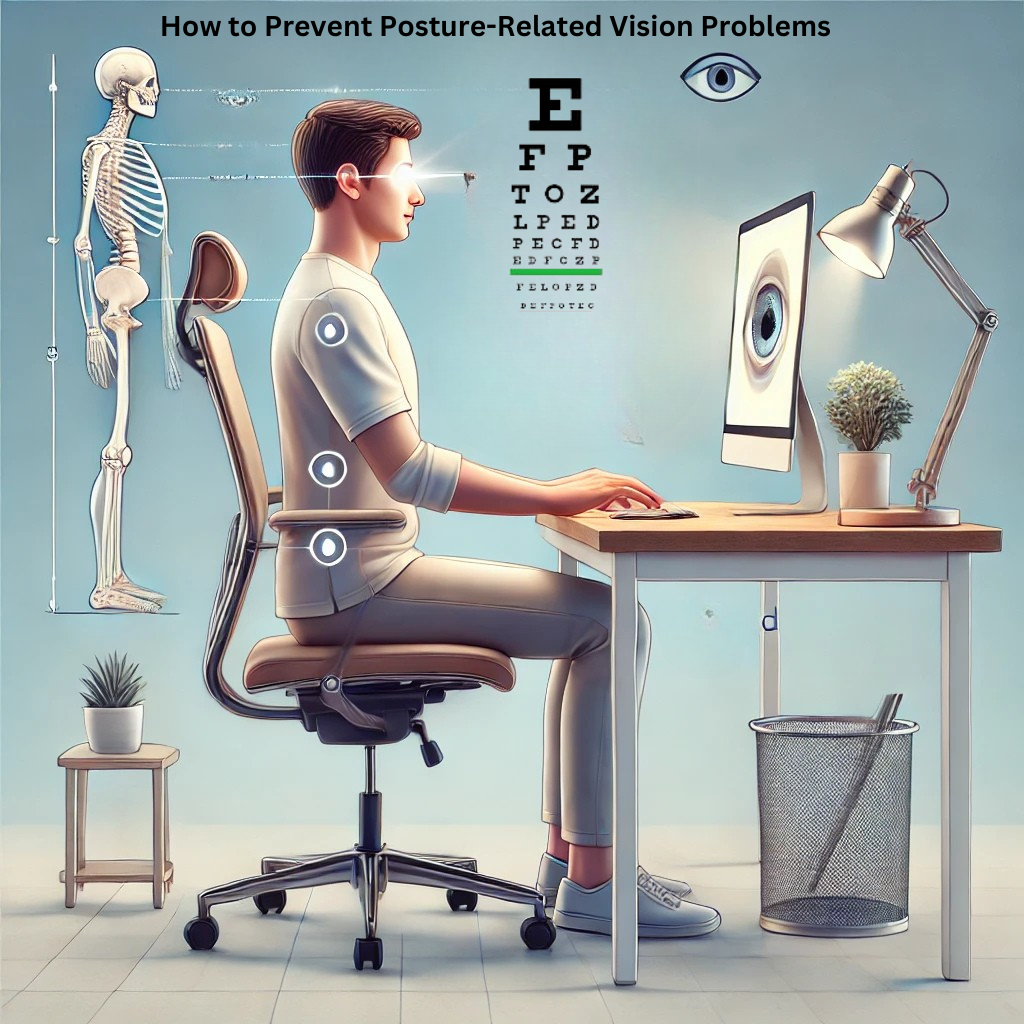
Fortunately, you can take proactive steps to improve both your posture and eye health. Here are some science-backed strategies:
1. Practise Proper Sitting Posture
- Keep your feet flat on the floor or on a footrest.
- Adjust your chair so that your knees are at a 90-degree angle.
- Sit up straight with your back fully supported by the chair.
- Keep your shoulders relaxed and avoid hunching forward.
- Position your monitor at eye level to prevent excessive neck strain.
2. Improve Your Workstation Ergonomics
- Adjust your screen to be at least 20 inches away from your eyes.
- Maintain a slight downward gaze when looking at the screen to reduce eye strain.
- Use blue-light filtering glasses to minimize digital eye fatigue.
- Ensure that lighting is evenly distributed to avoid glare.
3. Perform Eye and Neck Exercises
Incorporate simple eye exercises into your daily routine to maintain strong vision:
- Palming: Rub your hands together and place them over your closed eyes for 30 seconds to relieve strain.
- 20-20-20 Rule: Every 20 minutes, look 20 feet away for 20 seconds to reduce screen fatigue.
- Blinking Exercise: Blink consciously every few seconds to keep the eyes hydrated and refreshed.
For neck and posture exercises, try:
- Chin Tucks: Slowly tuck your chin toward your chest and hold for 5 seconds. Repeat 10 times.
- Shoulder Rolls: Roll your shoulders forward and backward to relieve tension.
- Neck Stretches: Gently tilt your head from side to side to stretch the neck muscles.
4. Use Proper Reading and Writing Techniques
- Avoid leaning forward when reading or writing.
- Keep reading material at arm’s length to reduce unnecessary strain.
- Use a slant board or adjustable stand to maintain an ergonomic reading position.
5. Strengthen Your Core and Back Muscles
Engaging in posture-friendly exercises like yoga, Pilates, and core strengthening workouts can help realign your spine and reduce the likelihood of vision-related issues.
6. Seek Professional Help If Needed
If you experience persistent visual discomfort, headaches, or postural pain, consult with:
- An optometrist to check for vision problems or the need for corrective lenses.
- A chiropractor or physical therapist to address spinal misalignment.
- A posture specialist to create a personalized plan for improving alignment.
Conclusion: A Healthy Spine for Healthy Eyes
Posture and vision are more interconnected than most people realize. Poor posture can cause vision problems, while uncorrected vision issues can contribute to bad posture. This creates a cycle of discomfort, fatigue, and long-term health issues.
By making small adjustments to how you sit, stand, and work, you can improve your posture and protect your eyesight. Remember to practise proper ergonomics, incorporate eye and neck exercises, and seek professional guidance if necessary.
A healthy spine leads to better eye health, ensuring that you stay sharp, focused, and pain-free for years to come.