Good vision is essential for everything from reading and working to driving and enjoying everyday life. However, many Canadians struggle with common vision problems like myopia (nearsightedness) and hyperopia (farsightedness), which can make routine tasks challenging.
While both conditions cause blurry vision, they affect different distances—myopia makes it difficult to see faraway objects, while hyperopia causes nearby objects to appear blurry. Fortunately, both conditions can be corrected with eyeglasses, contact lenses, or specialized treatments. A comprehensive eye exam with an optometrist can determine which condition is affecting your eyesight and what solutions can help you see clearly.
What Is Myopia?
Myopia, or nearsightedness, is a common vision condition that affects nearly 30% of Canadians. It occurs when the eyeball is too long or the cornea is too curved, causing light to focus in front of the retina instead of directly on it. As a result, distant objects appear blurry, while close-up vision remains clear.
Common Causes of Myopia
- Genetics: If one or both parents have myopia, their children are more likely to develop it.
- Excessive screen time: Spending long hours on digital devices can contribute to the progression of myopia.
- Limited outdoor exposure: Studies suggest that children who spend more time outdoors have a lower risk of developing myopia.
Example of Myopia in Everyday Life
A high school student sitting at the back of the classroom struggles to read notes on the whiteboard but has no trouble reading a textbook up close. This is a typical example of myopia, where distant vision is affected.
Symptoms of Myopia
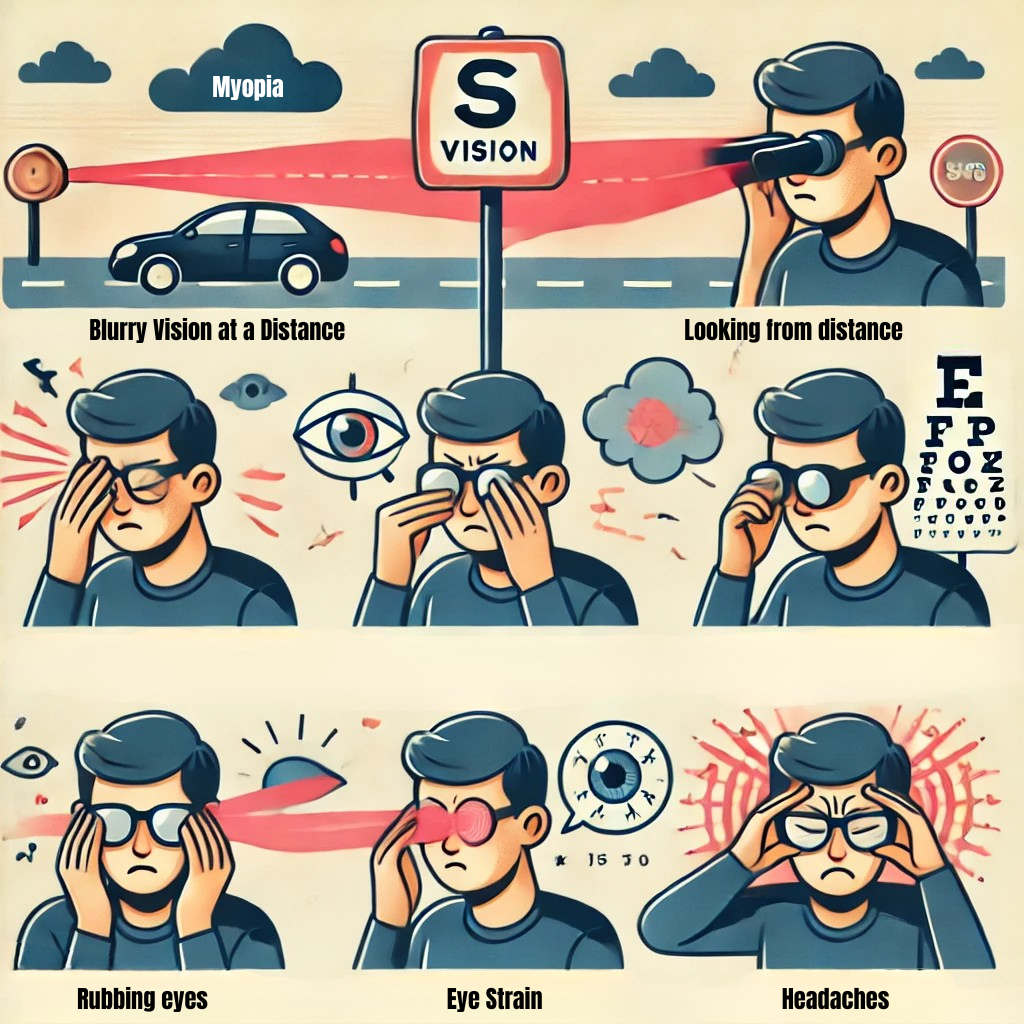
- Blurry vision when looking at distant objects
- Difficulty reading signs while driving or commuting
- Frequent squinting to see faraway details
- Eye strain after prolonged screen use
- Headaches due to overworking the eyes
Since myopia often starts in childhood, it can impact learning and school performance. A child who can’t see the board clearly may lose interest in lessons or experience frequent headaches from eye strain. This is why regular eye exams are crucial for early detection and correction.
What Is Hyperopia?
Hyperopia, or farsightedness, is the opposite of myopia. It happens when the eyeball is too short or the cornea is too flat, causing light to focus behind the retina instead of directly on it. This leads to difficulty seeing objects up close, while distant objects often remain clear.
Common Causes of Hyperopia
- Genetics: Hyperopia tends to run in families.
- Natural aging: While some people are born with hyperopia, it can also develop with age.
- Variations in eye structure: Differences in the shape of the cornea and lens can lead to hyperopia.
Example of Hyperopia in Everyday Life
A university student struggles to read small text in a textbook but has no trouble seeing a lecture presentation across the room. They might experience eye strain or headaches after long study sessions.
Symptoms of Hyperopia
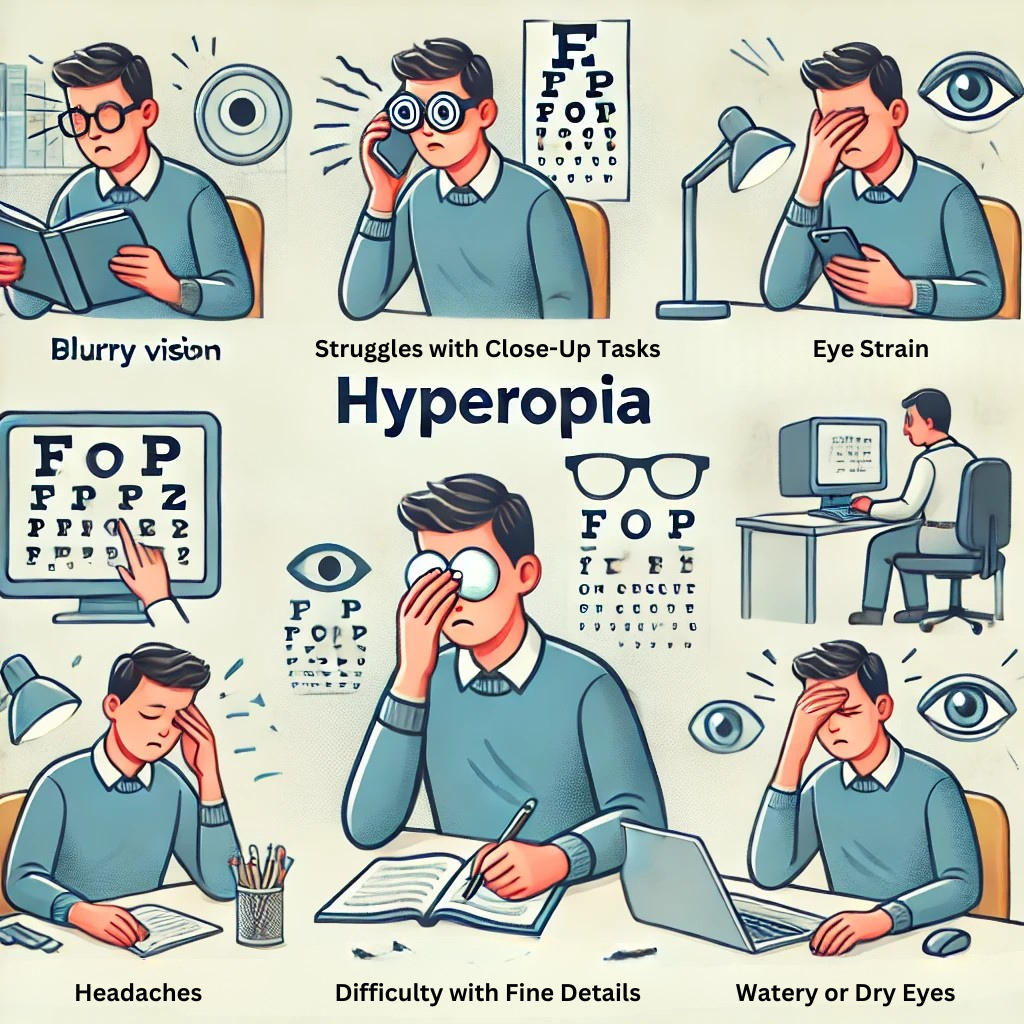
- Blurry vision when reading or using a phone
- Difficulty focusing on close-up tasks like writing or sewing
- Eye strain when working at a computer for extended periods
- Headaches, especially after reading or detailed work
- Trouble focusing on fine details
Hyperopia can make everyday tasks like reading, cooking, or texting difficult. Without correction, it can lead to fatigue and discomfort, especially after prolonged close-up work.
How Do Myopia & Hyperopia Affect Daily Life?
Both myopia and hyperopia can interfere with everyday activities, but the challenges differ depending on the condition.
Challenges of Myopia:
- Difficulty reading signs while driving or taking transit
- Trouble watching movies or sporting events from a distance
- Struggling to recognize faces from far away
- Increased risk of accidents due to poor long-distance vision
Challenges of Hyperopia:
- Difficulty reading books, menus, or text messages
- Eye strain while working on a laptop or phone
- Frequent headaches after close-up work
- Trouble focusing on hobbies that require detail, like knitting or painting
Recognizing these challenges is the first step toward seeking the right vision correction.
Vision Correction Options for Myopia & Hyperopia
The good news is that both myopia and hyperopia are easily treatable. The right correction depends on individual needs, lifestyle, and the severity of the condition.
Eyeglasses
Eyeglasses are the most common and convenient solution for both myopia and hyperopia.
- For myopia: Concave (minus) lenses help focus light properly for clear distance vision.
- For hyperopia: Convex (plus) lenses help bring near objects into focus.
Contact Lenses
Contact lenses work similarly to glasses but provide a wider field of vision and greater convenience for people with active lifestyles.
Statista Analysis on Myopia And Hyperopia

According to Statista, around 2.6 billion people worldwide were affected by myopia, or nearsightedness. In China alone, approximately 750 million individuals had myopia by 2021, accounting for more than half of the country’s population. Notably, about 110 million of these were children and adolescents, representing nearly 53% of the underaged population.
While specific prevalence statistics for hyperopia in Canada are limited, Statista notes that the increasing prevalence of eye disorders, such as myopia and hyperopia, is boosting demand for eyewear products in the country. This trend underscores the importance of regular eye examinations and access to corrective eyewear for Canadians.
How to Prevent & Manage Vision Changes
While genetics play a role in myopia and hyperopia, lifestyle habits also influence eye health. Here’s how to protect your vision:
For Myopia Prevention:
- Spend more time outdoors to reduce screen-related eye strain.
- Follow the 20-20-20 rule: Every 20 minutes, look at something 20 feet away for 20 seconds.
- Take breaks from digital screens to rest your eyes.
For Hyperopia Management:
- Use proper lighting when reading or working.
- Wear prescription glasses or contacts consistently to avoid eye strain.
- Practice eye exercises to improve focus on close-up objects.
Regular eye exams are essential to detect vision changes early and ensure you have the right prescription.
Take Control of Your Vision
Myopia and hyperopia are common, but they don’t have to interfere with your life. Whether you need glasses, contact lenses, or advanced treatments, there are plenty of options to help you see clearly.
At Bayside Eye Care, we’re committed to helping Canadians find the best vision solutions for their needs. If you’re experiencing blurry vision, eye strain, or trouble focusing, book an eye exam today and take the first step toward better eyesight.